Why Parent Education Hasn't Landed
Grounded in survey data and adult learning research
For a century, Montessori schools have invested in parent education. By their own accounts, the investment has not landed for most families.
What the survey actually shows
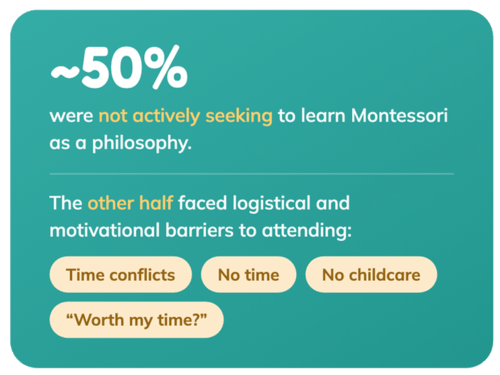
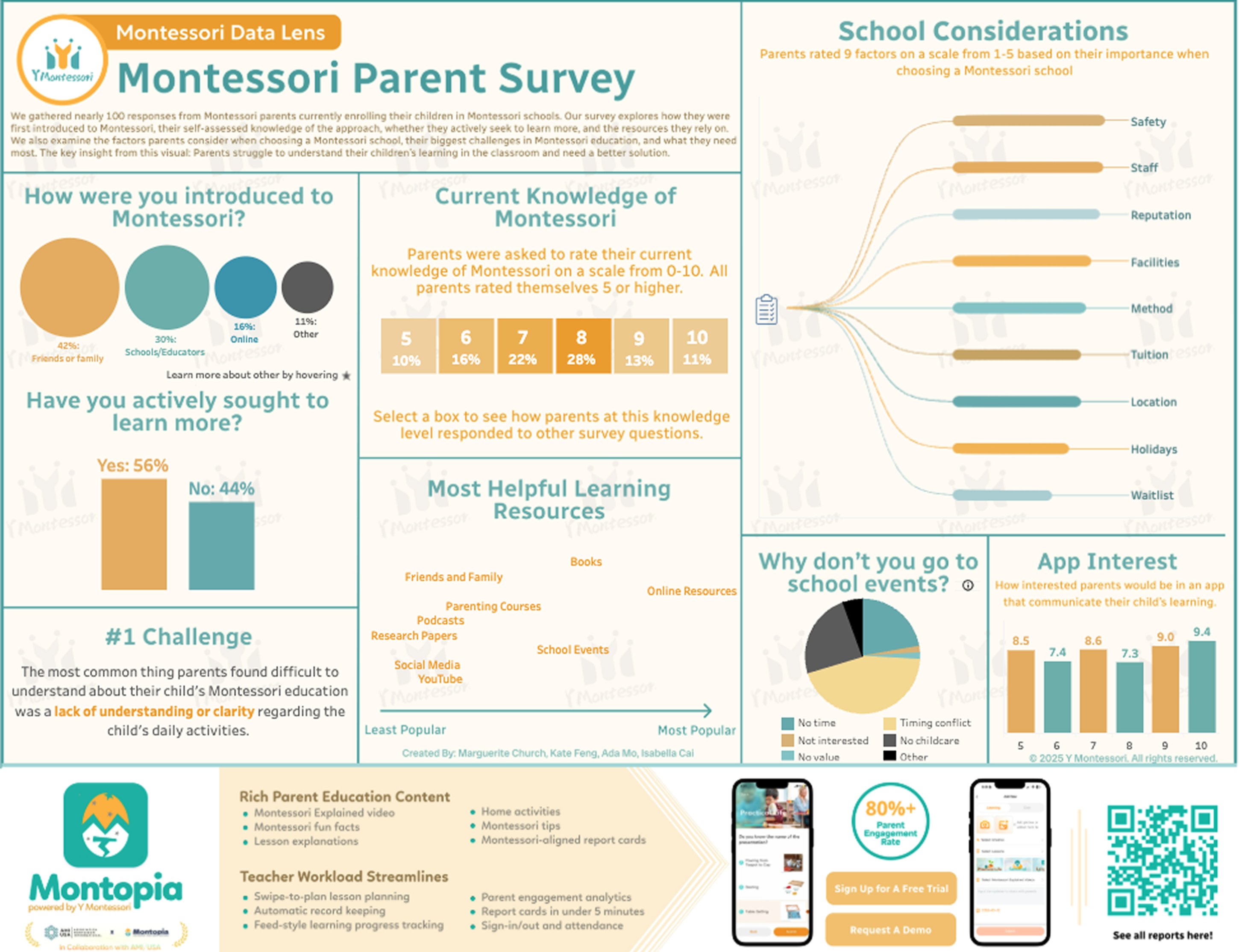
This thesis is grounded in a 2024 survey conducted through Montessori Data Lens. Nearly one hundred Montessori parents across four California Montessori schools were asked about their child's Montessori education and their experience as parents.
How adults actually learn
This thesis is grounded in a 2024 survey conducted through Montessori Data Lens. Nearly one hundred Montessori parents across four California Montessori schools were asked about their child's Montessori education and their experience as parents.
.png?width=900&height=467&name=five-principles-card%20(2).png)
"What parents want most is to understand their own child's daily learning"
What Parents Want and How School Have Tried to Give it
What parents want most is to understand their own child's daily learning. Schools have recognized this and built channels to meet it.
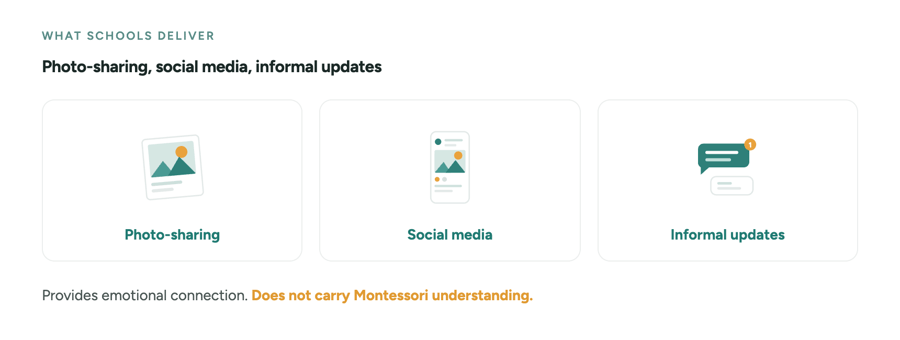
Individualization, translation, and real-time scale make substantive Montessori parent education at scale operationally impossible without new infrastructure.
Individualization
Each child progresses on their own path. No shared lesson plan can be broadcast.
Translation
Real-time Scale
The Intention Gap as Opportunity
Why embedded delivery works.
.png)
.png?width=1500&height=190&name=embedded-delivery-card%20(2).png)
Montessori Parent Education Through the Lens of the Child.
The central insight is this: parents aren't asking for more Montessori philosophy. They're asking for Montessori philosophy contextualized through their own child.
The new model closes the gap by embedding what schools want parents to know inside what parents most care about: their child's daily learning. Montessori is learned through the lens of the child.
The model rests on three operational components. Each is necessary; none is sufficient on its own. Together they form an integrated system that finally lets parents see Montessori in action on their child.
COMPONENT ONE
The Curriculum
A parent curriculum built around the child's curriculum. Micro-sized content, multiple formats, translated into parent language. Lesson explanations, short videos, home activities, research-backed insights, progress reports that finally make the Montessori process visible.
COMPONENT TWO
The Delivery
Embedded into the photo-sharing teachers already keep. The same photo, sent in the same moment, now arrives with developmental context attached. Record-keeping and progress reports automate from the data teachers generate while sharing.
COMPONENT THREE
The Encounter
Designed for how parents actually live. The thirty-second window before pickup. The child's photo as the reason to open. Content small enough to absorb in minutes and apply within the hour. The motivation is desire, not duty.
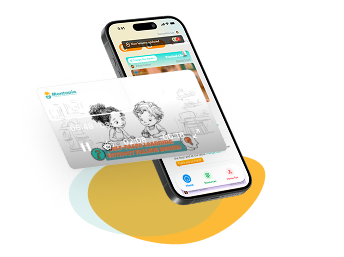
Montopia: The Working Version of the Model
Montopia is the platform Y Montessori built to deliver individualized parent education at scale. Each of the three components of the model has a concrete form in the product. Each component does the work the thesis describes, in a way teachers can sustain inside their teaching day and parents can absorb inside the small windows they actually have.
A Year of Usage Data Across a Network of Montessori Schools
The model produces an engagement pattern its design predicts: low time, near-total engagement, fast turnaround, real retention. Teacher work that stays inside the teaching day.
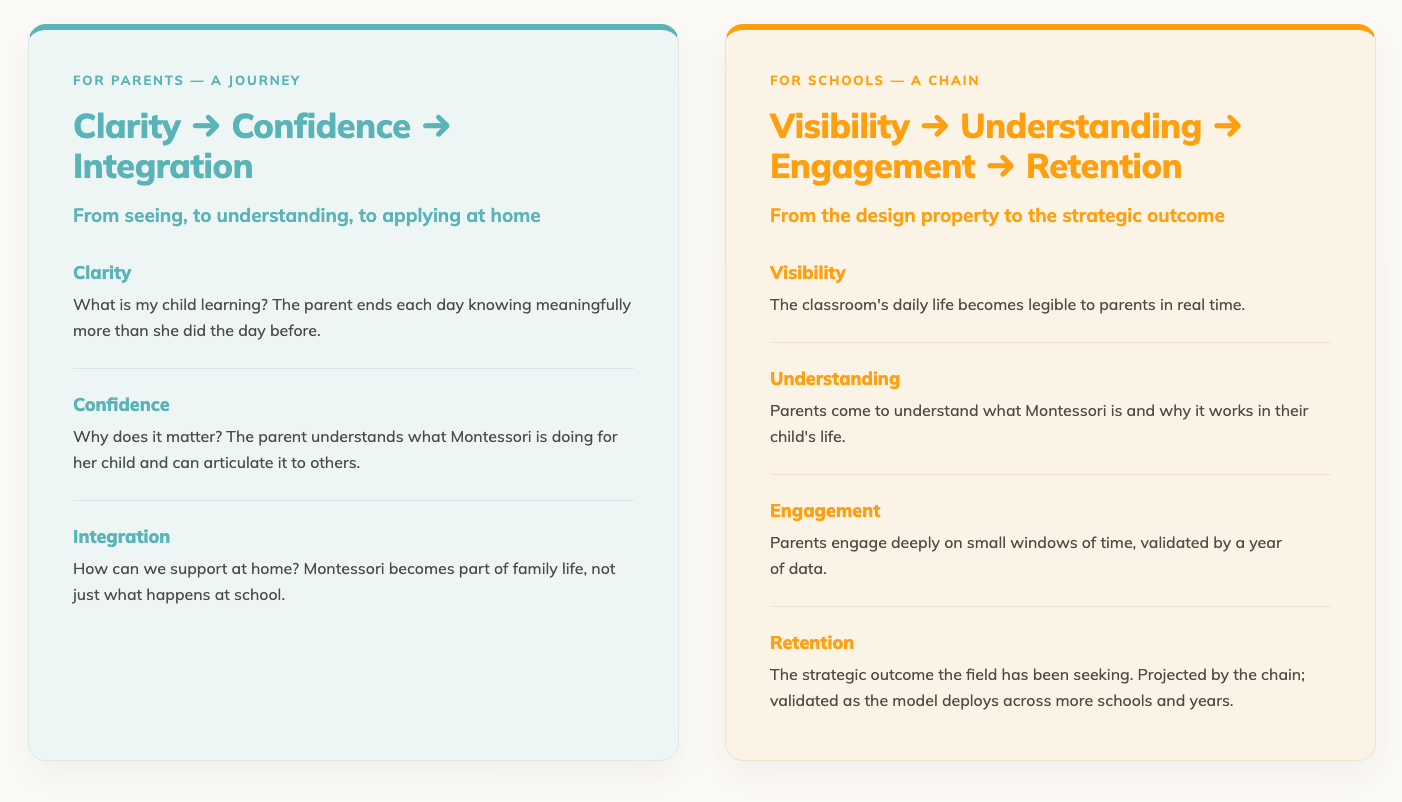
Two Outcomes, Two Perspectives
When the three components work together, the gap closes. The closing produces complementary outcomes on two sides simultaneously: a parent journey and a school-facing causal chain.
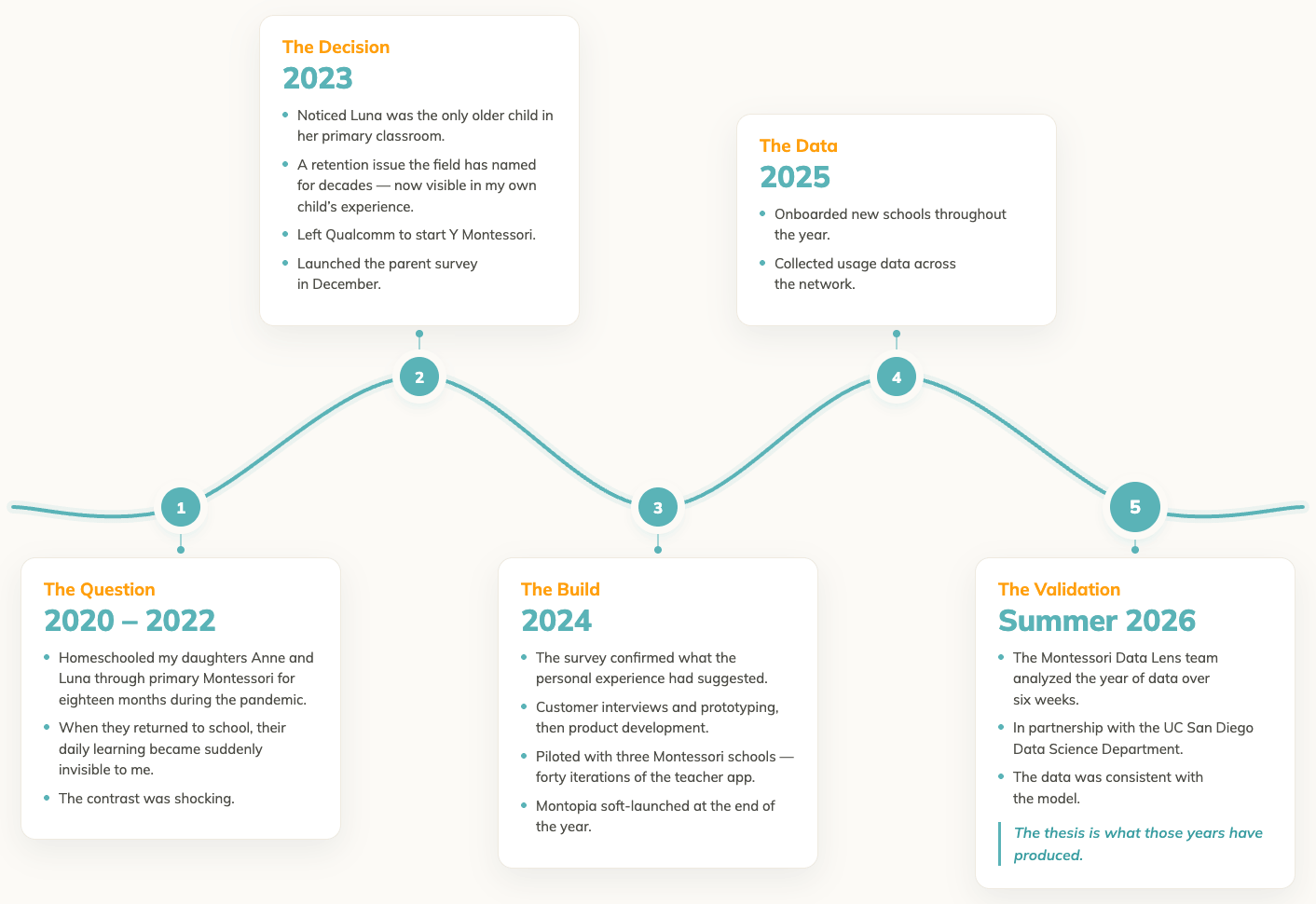
Four Years of Research, Design, and Iteration
The model didn't begin as a hypothesis; it began as a question from a confused parent. The arc that followed spans four years and is part of why the work is worth taking seriously.
Read the complete publication
A research publication that diagnoses the visibility gap, presents the new model, walks through the year of data, and discusses implications for the Montessori field.
The Visibility Gap
Why Traditional Parent Education Reaches Its Limits
The Central Insight
Individualized Parent Education at Scale
The Model: Three Components
What This Produces for Parents
What This Produces for Schools
Research, Development, and Validation
Implications for Montessori Education
Three Ways to Engage
Each path serves a different reader at a different stage of engagement with the work.
FOR RESEARCHERS
Subscribe to Data Lens
Future publications continue this work. Receive new Data Lens essays as they appear.
Subscribe to the publication →
FOR SCHOOLS
Start a Conversation
If the argument resonates with what you are seeing at your school, a 30-minute conversation can explore what implementing the model would look like.
Book a 30-minute call →
FOR COLLEAGUES
Share the Thesis
If the work would be useful to a colleague, a board member, a fellow director, a researcher, please share. The conversation grows when more people are in it.
Share by email →
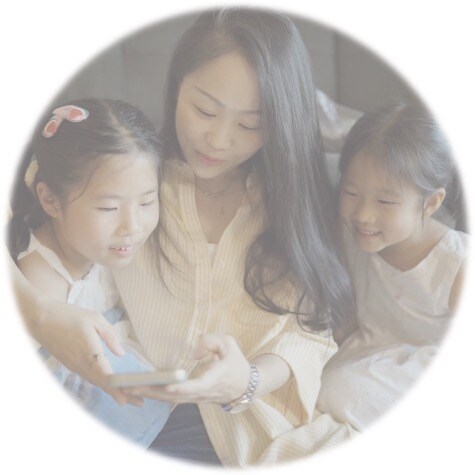
Isabella Cai
Isabella Cai is the founder of Y Montessori, the parent company of Montessori Data Lens, the research publication for the Montessori field from which this thesis is drawn, and Montopia, the parent education platform that implements the model this thesis describes. She came to Montessori as a parent: her two daughters, Anne and Luna, both attend Montessori school. She came to this work after homeschooling them through primary Montessori during the pandemic.
Her professional background is in data analytics. She spent eight years at Qualcomm working in data analysis, data visualization, and data program management. She holds a graduate degree from the UC San Diego School of Global Policy and Strategy, a program known for its quantitative rigor and emphasis on data-driven analysis.
Through Y Montessori, she leads two interconnected bodies of work. Montessori Data Lens is the research arm, partnered with the UC San Diego Data Science Department. Montopia is the platform arm, used across a network of Montessori schools. Isabella can be reached at isabellacai@ymontessori.com.